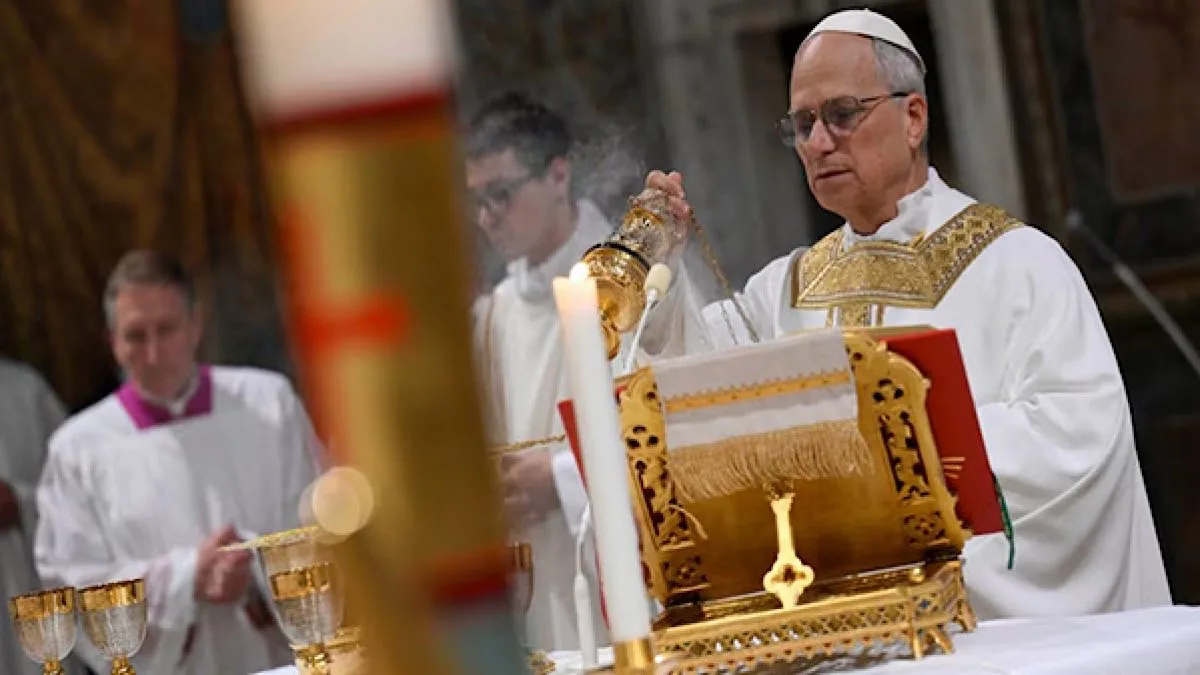
Pope Leo XIV’s first foreign trip was never going to be a routine pastoral visit. The geographies he chose, Turkey and Lebanon, are not only symbolic crossroads of faiths but also corridors of conflict where diplomacy, identity and history constantly collide. By stepping into these spaces at this moment, the new pontiff revealed far more about his emerging leadership style than any Vatican communiqué could. What stands out is the contrast between Pope Leo and his predecessor. While the previous pontificate was animated by urgency ~ a sense that time was limited and reforms had to be initiated quickly ~ Leo appears to be charting an almost contemplative path.
There is caution in his demeanour, and at times even the emotional weight of a man still coming to terms with the scale of the role he has inherited. Observers noted his eyes welling up in Istanbul’s Cathedral of the Holy Spirit, a small but telling moment that suggested the deeply personal dimensions of his new office. Yet caution has not meant silence. In Turkey, standing alongside the country’s powerful President, the Pope criticised the dangerous swagger of nations that treat military and economic might as first principles of global order. He warned starkly that the future of humanity cannot be safeguarded by a world endlessly sharpening its divisions. And in invoking the need for a Palestinian state, while simultaneously reaffirming friendship with Israel, he signaled a willingness to articulate moral clarity in one of the planet’s most entrenched disputes. Lebanon, however, offered the fullest glimpse into Pope Leo’s instincts. Despite its governance failures, sectarian fissures and the aftermath of recent attacks, the country welcomed him with an uncommon unity.
Advertisement
Christians, Muslims and Druze alike turned out, a reminder that symbolic gestures still matter in a region fatigued by geopolitical manoeuvres. Even groups whose relations with the West are typically adversarial extended greetings, underlining how the papal office remains a rare bridge across ideological divides. But every bridge has its limits. Critics in southern Lebanon, especially those living closest to the fighting, felt overlooked. Their resentment is a reminder that high-level diplomacy cannot erase the lived realities of communities whose suffering is ongoing. For Leo, this tension between symbolic presence and tangible engagement will define many future journeys. What this first trip ultimately revealed is a leader emerging slowly but deliberately.
Pope Leo seems less interested in dramatic gestures and more in steadying a fractured global conversation. His approach is neither fiery nor withdrawn; it is a deliberate search for common ground at a time when the world is running out of it. If his early steps are any indication, Leo XIV is shaping a papacy rooted in listening, humility and the quiet conviction that dialogue, however imperfect, remains the only durable path through conflict